
- 2024-05-30
- source: Beijing Global Talents Exchange Association


- 【font: big middle small】
On the afternoon of May 29, the 2024 Sino‑Russian Science and Technology Innovation Cooperation Symposium, co‑hosted by Beijing Global Talents Exchange Association and Moscow State University of Technology (STANKIN), took place at Zhongke Building in Haidian District, Beijing. The event received support from the Beijing International Center for Science and Technology Exchange and Jinan Talent Service Center. It was organized by Juyingchuang Group and Global Talent Network, with Beijing Zhongguancun Listed Companies Association and Beijing Zhongguancun High‑tech Enterprises Association as co‑organizers.
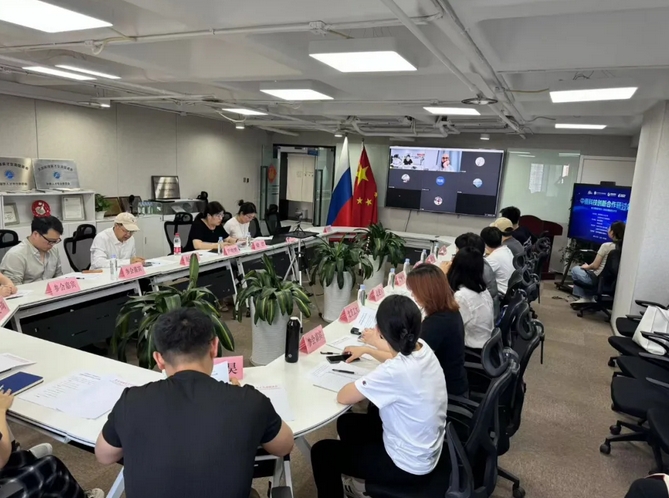
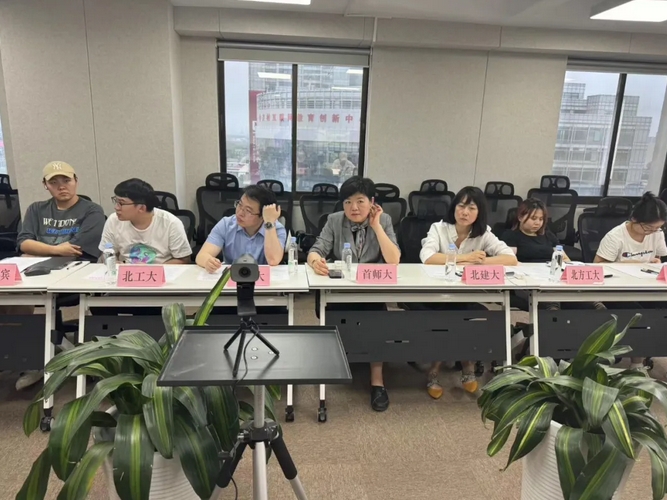
Representatives from multiple Beijing‑based universities including Beijing University of Technology, Beijing University of Civil Engineering and Architecture, Capital Normal University and University of Science and Technology of China attended the event on‑site, while counterparts from Shandong‑based universities such as Qilu University of Technology and Shandong University of Aeronautics participated online. Liang Jun, Executive Secretary‑General of the Secretariat of Beijing Global Talents Exchange Association, presided over the symposium.
At the opening of the symposium, Lu Xiaopeng, Deputy Director of the Beijing International Center for Science and Technology Exchange, delivered an address. He noted the long‑standing friendship between China and Russia, and expressed hopes that the symposium would further strengthen ties between Beijing and Moscow, boost bilateral cooperation in science‑technology and humanities, enhance the capacity of Beijing’s key laboratories, research platforms and innovation entities to attract talent, facilitate the development of Beijing as an international centre for scientific and technological innovation and international exchange, and contribute to the high‑quality development of the Chinese capital.
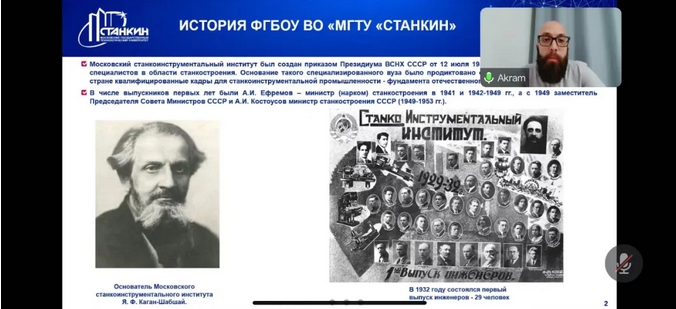
Ali Khuri Akram, representative from Moscow State University of Technology (STANKIN), gave a detailed introduction to the university’s history, academic programmes, research achievements and existing cooperation with Chinese institutions. He mentioned that the university has already established partnerships with institutions in Harbin and Chongqing. For 2024, it sincerely looks forward to building new ties with universities in Beijing and other parts of China in forms including joint training programmes, co‑built laboratories and summer school projects for undergraduates. The university will also select outstanding students interested in Chinese culture to pursue exchange studies in China and participate in Chinese‑language training.
Director Lu from the International Office of Capital Normal University pointed out that the academic programmes of the School of Information Engineering and the Law School are well aligned with those of Moscow State University of Technology. The university hopes to launch joint training programmes and credit‑recognising semester exchange schemes, and welcomes students from the Russian university to study Chinese at Capital Normal University.
Dean Ding from the Institute of International Development at Beijing University of Civil Engineering and Architecture mentioned that the university founded the International Alliance of “Belt and Road” Architectural Universities in 2017. He extended a warm invitation to Moscow State University of Technology to take part in international exhibitions and other alliance events. The university is ready to carry out joint research projects for faculty members in mechanical engineering, as well as undergraduate semester exchanges and joint training initiatives.
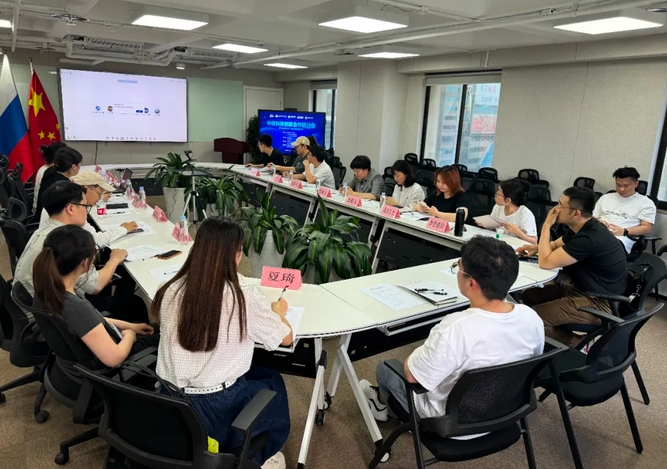
Faculty representatives from Beijing University of Technology and Qilu University of Technology stated that their institutions share similar academic disciplines with Moscow State University of Technology. They hope to send faculty members to the Russian university for exchanges in fields such as digital machinery, intelligent manufacturing and digital machine‑tool technology, so as to draw on its strengths and improve teaching capacity at their home universities.
The two‑hour symposium proceeded in a warm and friendly atmosphere and deepened mutual understanding among participants. Attendees remarked that this event marks only the starting point for future collaboration. They expressed the wish to invite deans, experts and scholars from Moscow State University of Technology to visit Chinese capital universities for field investigations, work out concrete cooperation details, enrich Sino‑Russian exchanges and cooperation in science‑technology, education and humanities, and support the building of Beijing into a high‑calibre talent hub.
 京公网安备 11010802028726号